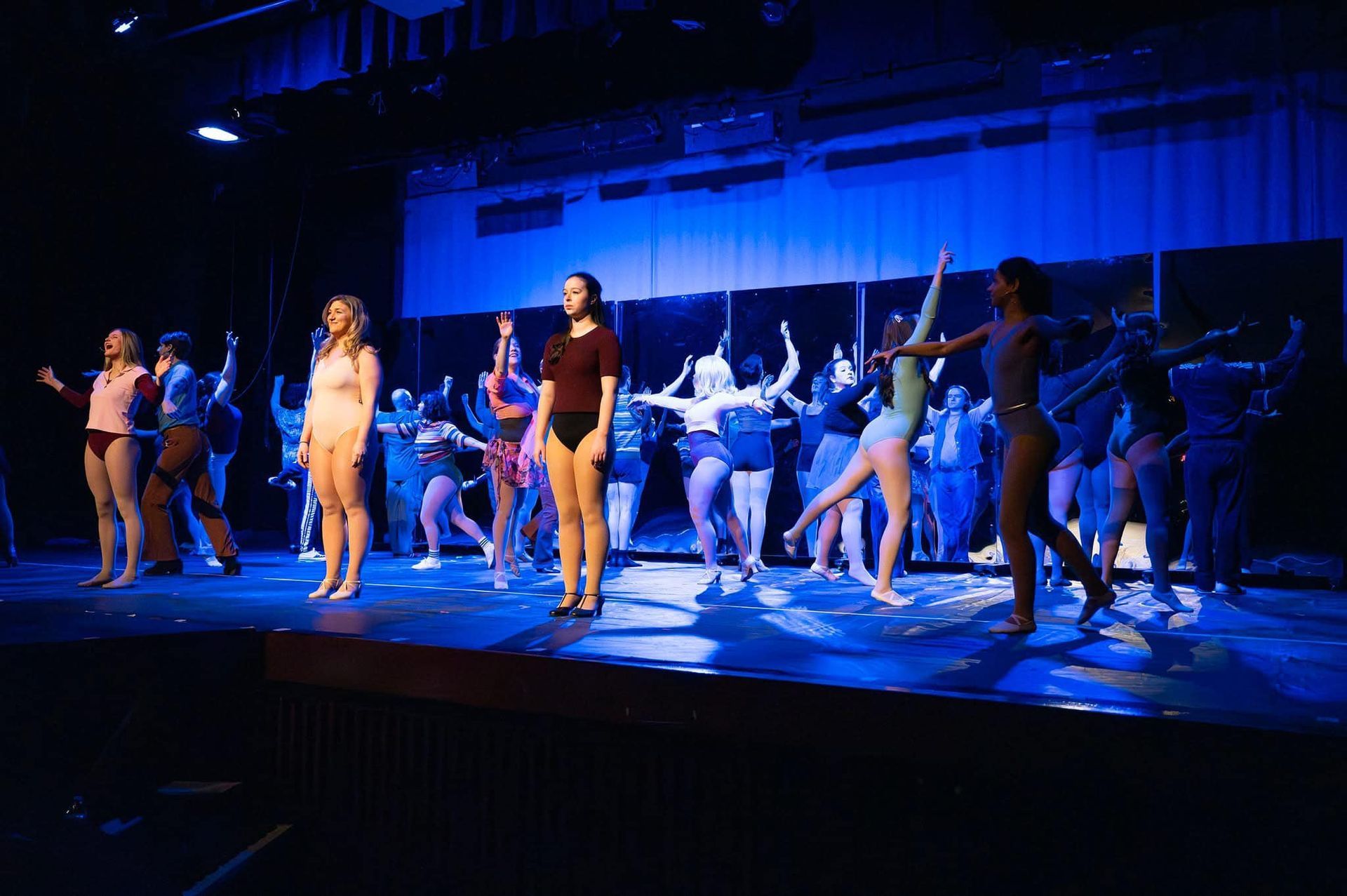
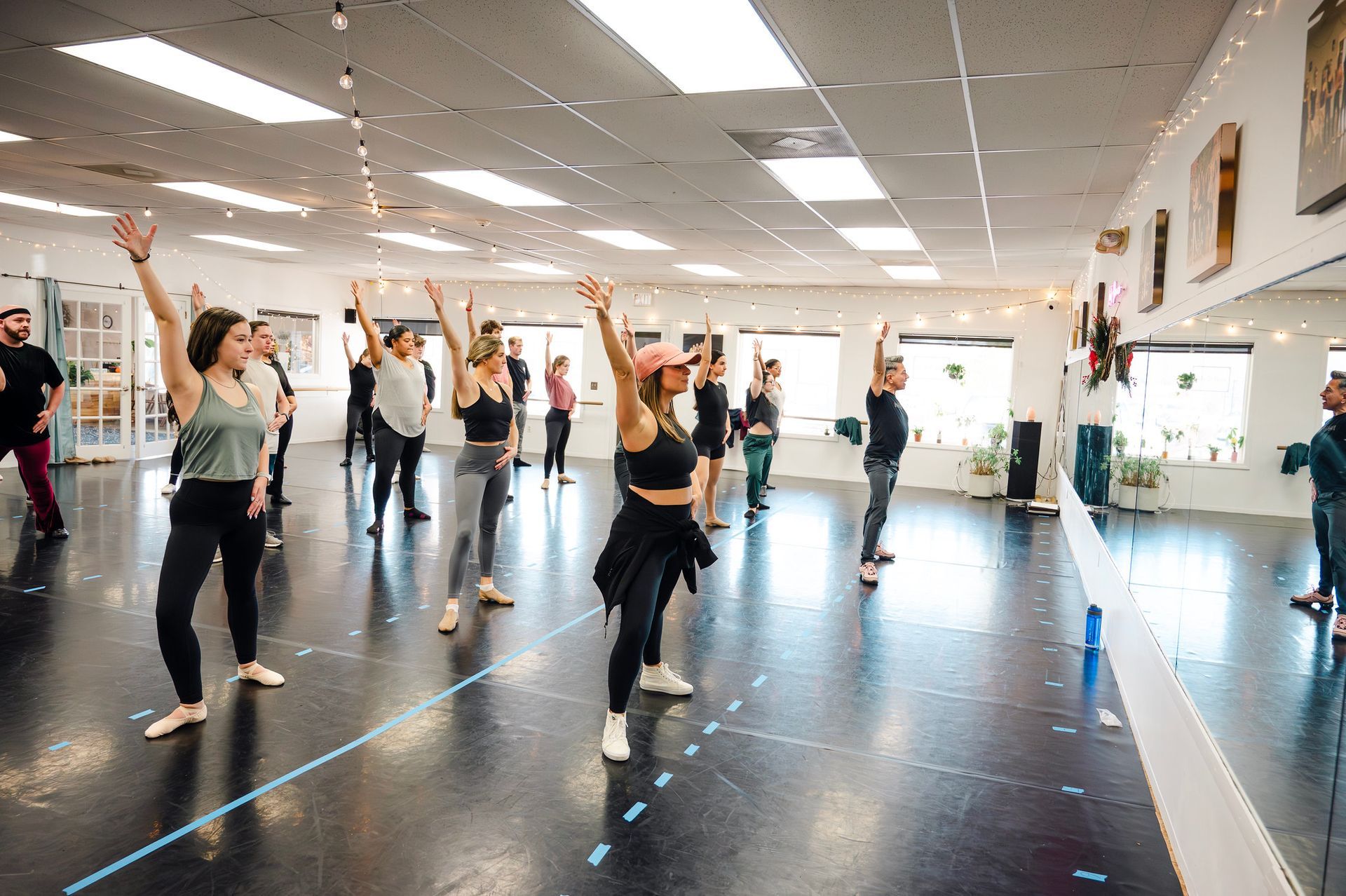
There are theatre people who carefully color-code their calendars, protect one sacred day off each week, and politely decline auditions when life gets too full. And then there are the people who enjoy juggling the overlap. When I asked theatre artists whether they work on multiple productions at the same time, the responses ranged from “absolutely not” to “I once did fourteen months straight of being in shows, "and “I currently play on five different Broadway shows.”
Some people described overlapping productions as creatively energizing. Others described it as a direct path to anxiety, exhaustion, and forgetting what their living room looks like. Most landed somewhere in between.
One thing became very clear very quickly: this conversation was not really about right versus wrong. It was about how different people experience theatre, pressure, creativity, and balance...and bandwidth played a big role.
Actors and Production Teams Often See Overlap Differently
One of the strongest patterns in the responses was the divide between performers and people working in production, music, directing, or technical roles. Many actors described performing as something that requires complete emotional and mental investment.
“As someone whose only theatre work is onstage, I make a very conscious effort to not do multiple shows at once,” wrote Carl Cannella II. “I think it does a disservice to both productions to have any actors dividing their time and attention between shows.”
J’zeida Ortega echoed a similar sentiment from a different perspective. “I’m a chronic perfectionist,” she wrote. “If I do two productions at once, I wouldn’t be able to dedicate the time I feel each one deserves.”
Others explained that overlap becomes easier when the responsibilities are different. Actor plus choreographer? Fine. Performer plus director? Manageable. Two major acting roles at once? Much trickier.
Natalie Grace said she only overlaps productions “as long as I have different ‘roles’ ie actor vs production team vs crew and show dates don’t overlap.”
Meanwhile, people on the production side often talked about multitasking like it was simply part of the job description.
John Pike described simultaneously directing, musical directing, casting, producing, and dramaturging multiple projects at once. Tom Dugan said he regularly works on future show designs while rehearsing current productions.
“I think it keeps things fresh for me,” Dugan wrote. “I’m not completely wrapped in one show and I don’t burn out.”
Both John and Tom direct shows for a living, so it was an interesting perspective to see that working on multiple shows, when that is your main responsibility, can be energizing rather than exhausting.
Broadway musician, Matt Melore, described a version of overlap that sounds almost impossible to civilians outside theatre. “I currently play on five different Broadway shows playing trombones/low brass for six different chairs,” he wrote. “It can be tough, but it keeps you on your toes!” I had the honor of playing trombone/low brass with Matt in high school, and let me tell you, he is a helluva musician. What it takes to be able to play a single book in a Broadway orchestra...let alone five at once!
For Some People, Theatre Functions Like Fuel
Several respondents genuinely seemed to thrive on overlapping productions.
Aaron Reynolds said constant productions “keeps me active.”
Marcevan Costanzo described balancing three shows at once in his twenties and said the workload “fueled me with energy and purpose.”
Ethan Sirard talked about simultaneously playing Jean Valjean in Les Misérables and Michael in Be More Chill. “The dual-rolling helped keep my mind sharp and kept me on my game the entire time,” he wrote.
For some artists, being constantly busy seemed to create momentum rather than drain it. The language people used was surprisingly consistent:
“sharp”
“active”
“purpose”
“happy”
“kept going”
Mal Sillars summed up that feeling perfectly: “I once did fourteen months straight of being in shows, and I could have kept going!”
At the same time, even many of the people who loved the chaos acknowledged there was a limit somewhere. David Leslie said he enjoys doing multiple shows until they become too consecutive. “When I go back-to-back-to-back on multiple shows, it starts to feel like work, and not the fun release that I use theater to get.”
Burnout Was Usually About Life, Not Theatre
Interestingly, most people did not cite the overlapping shows themselves as the cause of stress. Instead, what people did mention repeatedly were things like:
- family
- sleep
- work schedules
- mental overload
- commuting
- childcare
- recovery time
Chelsea Roper probably gave the most honest summary of that balancing act.
“I did 6 shows one year, as a performer and choreographer with a full-time job and a kid, and while I was the most fit and busy I’ve ever been, I neglected my whole ass life.”
BethAyn Curtis said she stopped doing multiple shows largely because of family life.
“It is not fair to them when I am literally never home.”
Several people who once loved overlapping productions said age and changing responsibilities shifted their perspective over time.
“When I was in my 20’s-30’s I couldn’t get enough,” Melissa Dupont wrote. “As I got older I just focused on one show at a time.”
Theatre itself was rarely framed as the problem. The problem was trying to fit theatre into an already overloaded life.
Community Theatre and Professional Theatre Operate Very Differently
Another interesting divide appeared between professional theatre artists and community theatre performers.
Professionals often normalized overlapping productions because theatre is the job. Rehearsal structures are tighter, expectations are different, and the entire schedule revolves around performance work.
Community theatre participants described a completely different equation. Many are balancing rehearsals with full-time jobs, parenting, commuting, and unpredictable schedules.
Amelia Nemeth explained the difference clearly. “Professionally was done in rep/during summer stock so that was intense but I don’t feel it affected my experience negatively,” she wrote. “Community theatre was a different story.”
Cassie Wood-Triplett pointed out another reality unique to theatre culture (and a sweet reminder):
“How else do you make sure you don’t lose your hobby?”
That comment hit on something several responses hinted at. Theatre can create pressure to stay constantly involved because participation often depends on auditions, visibility, networking, and availability. If you step away for too long, it can feel like disappearing from the community altogether.
Some Roles Deserve Their Own Space
Even many respondents who enjoyed overlapping productions admitted they make exceptions for certain opportunities.
David Leslie said if he lands a dream role, he will not consider another show at the same time because he wants to “fully experience the dream.”
That idea came up more than once in different ways. Some artists enjoy multitasking generally, but still recognize that certain productions require complete immersion.
Others simply know how their brains work.
Janet Aldrich wrote:
“I get horribly anxious, can’t give the shows my best, and just wait for them to be over when the whole point was to enjoy the experience!”
Meanwhile, Dawn Ross had almost the exact opposite reaction:
“My brain thrives on multitasking.”
Neither approach was presented as more correct than the other. Most people seemed deeply aware of their own limits, strengths, and stress points. Which honestly may be the most theatre-person thing of all. Because whether someone was juggling four productions or carefully protecting one rehearsal schedule at a time, nearly every response came back to the same idea: people are trying to preserve the part of theatre that makes them feel most alive. Sometimes that means nonstop rehearsals and color-coded Calendars. Sometimes it means saying no.